rEmember, remember, the fifth of November!
 remember, remember the Fifth of november,
the gunpowder treason and plot,
i can think of no reason
why the gunpowder treason
should ever be forgot.
guy fawkes, guy fawkes, t'was his intent
to blow up the king and parli'ment.
three-score barrels of powder below
to prove old england's overthrow;
by god's providence he was catch'd
with a dark lantern and burning match.
holloa boys, holloa boys, let the bells ring.
holloa boys, holloa boys, god save the king!
v: but on this most auspicious of nights, permit me then, in lieu of the more commonplace sobriquet, to suggest the character of this dramatis persona.
v: voilà! In view, a humble vaudevillian veteran, cast vicariously as both victim and villain by the vicissitudes of fate. This visage, no mere veneer of vanity, is a vestige of the vox populi, now vacant, vanished. however, this valorous visitation of a by-gone vexation, stands vivified and has vowed to vanquish these venal and virulent vermin van-guarding vice and vouchsafing the violently vicious and voracious violation of volition.
[carves v into poster on wall]
v: the only verdict is vengeance; a vendetta, held as a votive, not in vain, for the value and veracity of such shall one day vindicate the vigilant and the virtuous.
[giggles]
v: verily, this vichyssoise of verbiage veers most verbose, so let me simply add that it's my very good honor to meet you and you may call me v.
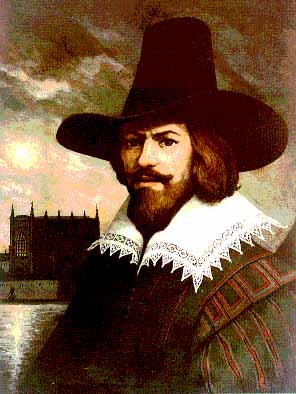
guy fawkes a member of a group of english roman catholic revolutionaries who planned to carry out the gunpowder plot. the plot was foiled shortly before its intended completion, as fawkes was captured while guarding the gunpowder on that dark night in november. so what is all the fuss about? i'll tell you a little about the man...and you decide for yourself what kind of a man he was.
fawkes held a post of command when the spaniards took calais in 1596 under the orders of king philip II of spain. he was described at this time as a man "of excellent good natural parts, very resolute and universally learned", and was "sought by all the most distinguished in the archduke's camp for nobility and virtue". tesimond also describes him as "a man of great piety, of exemplary temperance, of mild and chearful demeanour, an enemy of broils and disputes, a faithful friend, and remarkable for his punctual attendance upon religious observance".
can anyone guess what his temperament type is? (answer is located somewhere in this blog. Just keep looking from this line up.)
***
Fawkes's appearance by now was most impressive. He was a tall, powerfully built man, with thick reddish-brown hair, flowing moustache, and a bushy reddish-brown beard. He had also apparently adopted the name or affectation Guido in place of Guy. His extraordinary fortitude, and his "considerable fame among soldiers", perhaps acquired through his services under Colonel Bostock at the Battle of Nieuport in 1600 when it is believed he was wounded, brought him to the attention of Sir William Stanley (in charge of the English regiment in Flanders), Hugh Owen and Father William Baldwin.
Early in the morning of 5 November, the Privy Council met in the King's bedchamber, and Fawkes was brought in under guard. He declined to give any information beyond that his name was Johnson and he was a servant of Thomas Percy. Further interrogations that day revealed little more than his apparent xenophobia. When questioned by the King how he could conspire such a hideous treason, Fawkes replied that a dangerous disease required a desperate remedy, and that his intentions were to blow the Scotsmen present back into Scotland.
King James indicated in a letter of 6 November that "The gentler tortours are to be first used unto him, et sic per gradus ad mia tenditur [and so by degrees proceeding to the worst], and so God speed your goode worke", as it [torture] was contrary to English common law, unless authorised by the King or Privy Council. Eventually on 7 November Guido's spirit broke and he confessed his real name and that the plot was confined to five men. "He told us that since he undertook this action he did every day pray to God he might perform that which might be for the advancement of the Catholic Faith and saving his own soul". The following day he recounted the events of the conspiracy, without naming names, then on the 9 November he named his fellow plotters, having heard that some of them had already been arrested at Holbeche. Guido's final signature, a barely legible scrawl, is testament to his suffering. There is no direct evidence as to what tortures were used on Guy Fawkes, although it is almost certain that they included the manacles, and probably also the rack.
On Monday 27 January 1606, the day of the capture of Edward Oldcorne and Henry Garnet, the trial of the eight surviving conspirators began in Westminster Hall. It was a trial in name only, for a guilty verdict had certainly already been handed down. The conspirators pleaded not guilty, a plea which caused some consternation amongst those present. Fawkes later explained that his objection was to the implication that the "seducing Jesuits" were the principal offenders.
On Friday, 31 January 1606, Fawkes, Thomas Wintour, Ambrose Rookwood and Robert Keyes were taken to the Old Palace Yard at Westminster and hanged, drawn and quartered "in the very place which they had planned to demolish in order to hammer home the message of their wickedness". Thomas Wintour was followed by Rookwood and then by Keyes. Guido, the "romantic caped figure of such evil villainy" came last. A contemporary wrote:
"Last of all came the great devil of all, Guy Fawkes, alias Johnson, who should have put fire to the powder. His body being weak with the torture and sickness he was scarce able to go up the ladder, yet with much ado, by the help of the hangman, went high enough to break his neck by the fall. He made no speech, but with his crosses and idle ceremonies made his end upon the gallows and the block, to the great joy of all the beholders that the land was ended of so wicked a villainy".
David Jardine, in his book "A Narrative of the Gunpowder Plot" (1857), says that "according to the accounts of him, he is not to be regarded as a mercenary ruffian, ready for hire to do any deed of blood; but as a zealot, misled by misguided fanaticism, who was, however, by no means destitute of piety or humanity".
Reproduced by kind permission of the Gunpowder Plot Society
Sources
.............
Aveling, Dom. Hugh, O.S.B., 'The Catholic Recusants of the West Riding of Yorkshire 1558-1790', Proceedings of the Leeds Philosophical & Literary Society, Leeds, X, 1963
Church of Jesus Christ of Latter-day Saints, International Genealogy Index
Davies, Robert, The Fakkes of York in the Sixteenth Century, Including Notices of the Early History of Guye Fawkes, the Gunpowder Plot Conspirator
Dictionary of National Biography, 1895
Durst, Paul, Intended Treason: What really happened in the Gunpowder Plot, 1970
Edwards, Francis, S.J., Guy Fawkes: the real story of the Gunpowder Plot?, 1969
Edwards, Francis, S.J., The Gunpowder Plot: the narrative of Oswald Tesimond alias Greenway, trans. from the Italian of the Stonyhurst Manuscript, edited and annotated, 1973
Fraser, Antonia, Faith & Treason - The Story of the Gunpowder Plot, 1996
Gardiner, Samuel Rawson, What Gunpowder Plot Was, 1897
Gerard, John, The Autobiography of a Hunted Priest, tr. Philip Caraman
Gerard, John, S.J., What was the Gunpowder Plot? The traditional story tested by original evidence, 1897
Hawarde, Reportes of Star Chamber
Haynes, Alan, The Gunpowder Plot, 1994
Howell, Thomas Bayley, ed., Cobbett's Complete Collection of State Trials.., II, 1603-1627
Jardine, David, A Narrative of the Gunpowder Plot, 1857
Longley, Katharine M., Three Sites in the City of York
Pullein, Catharine, The Pulleynes of Yorkshire, 1915
Simons, Eric N., The Devil of the Vault, 1963
Spink, Henry Hawkes, The Gunpowder Plot and Lord Mounteagle's Letter, 1902
Weekely News, Monday 31 January 1606
Labels: 2008, Guy Fawkes Day NOV. 5
posted by Alex @ 6:59 PM
0 Comments


